Real full fibre availability
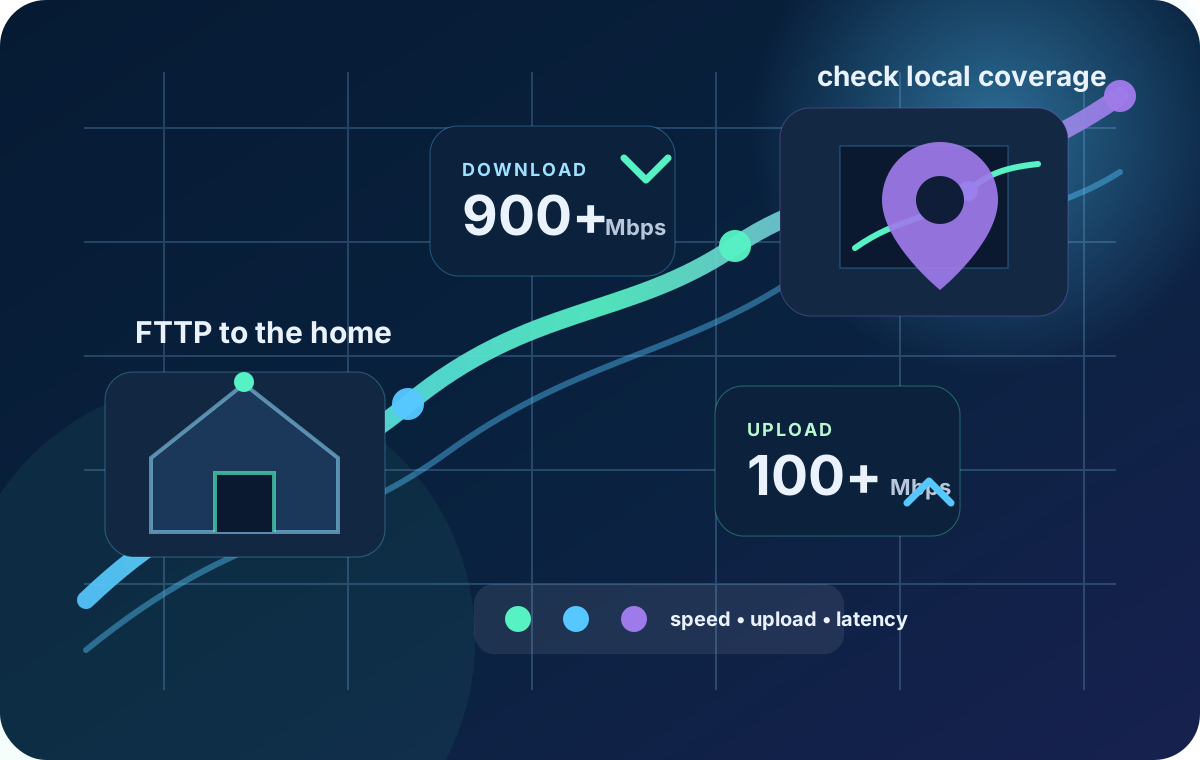
FTTP must be available at your exact address. A provider may cover your town but not your street, building or exchange area.
Compare full fibre and FTTP broadband options for speed, upload performance, gaming, streaming, working from home and future-proofing.
FULL FIBRE BROADBAND GUIDE
Full fibre can be the strongest broadband technology where it is available, but the best package still depends on address availability, upload speed, router quality, installation timing, contract terms and how your household actually uses the connection.
Quick answer
FTTP must be available at your exact address. A provider may cover your town but not your street, building or exchange area.
Upload matters for video calls, cloud backup, creators, CCTV, livestreaming and working from home.
Full fibre often feels more responsive because it can keep ping, jitter and loaded latency under control.
Do not overbuy gigabit if a cheaper 150 Mbps, 300 Mbps or 500 Mbps FTTP package suits the home.
The best full fibre broadband is not just the highest headline download speed. Check the technology, provider network, router, upload speed, minimum speed terms and whether the installation date fits your switching window.
| Feature | Why it matters | What to check before switching |
|---|---|---|
| FTTP availability | Full fibre must reach your exact property, not just your postcode area. | Run an address-level availability check before comparing prices. |
| Upload speed | Busy homes, creators and homeworkers can feel upload limits more than download limits. | Compare upload speed, not only headline download speed. |
| Latency and loaded latency | Gaming, calls and cloud apps need responsiveness as well as speed. | Run speed, ping and loaded-latency tests on your current line first. |
| Router quality | A weak router can make a good full fibre line feel poor over Wi‑Fi. | Check Ethernet ports, Wi‑Fi generation, mesh support and router reviews. |
| Installation route | FTTP may need an engineer, ONT, new cable route or landlord/building access. | Check installation dates, access requirements and switching overlap. |
Usually the best long-term choice where available: high capacity, strong upload options and stable performance.
Check full fibre availabilityCan be very fast for downloads, but upload ratios, router performance and local congestion can still matter.
Compare broadband providersCan still work for smaller homes, but copper distance can limit speed, upload and reliability.
Read fibre vs full fibreUseful where fixed-line options are poor, but speed, jitter and packet loss can vary by signal and mast load.
Diagnose 5G lagA coverage map and an availability checker should not be treated as the same thing. A map is useful for understanding area-level rollout and regional fibre progress. An availability checker is the better action step when a user is close to switching, because it checks address-level provider options.
Use this for wider context: where full fibre is growing, which areas are improving and whether your town is likely to have FTTP options.
Open coverage mapUse this before switching. It is the right destination for address-level availability, package comparison and provider next steps.
Check broadband availabilityUse this after you know what is available, especially if you are in contract, out of contract or worried about downtime.
Read how to switchGigabit full fibre is useful if your home downloads large files, has several heavy users, streams in 4K, backs up to cloud storage or works with large media files. Many homes will feel a big upgrade from FTTC even on a mid-tier FTTP package.
Good for smaller homes, streaming, browsing and everyday working from home.
Strong middle ground for busy households, multiple streams and faster downloads.
Best for heavy downloads, large households, creators, gamers downloading big updates and future-proofing.
Full fibre usually means FTTP, where fibre optic cabling runs all the way directly into your property, rather than stopping at a street cabinet.
Yes. FTTP is significantly better than part-fibre FTTC because it can offer stronger download and upload speeds, better reliability and more stable latency.
Gigabit can be useful for busy homes, large downloads, cloud backups and creators, but not every household needs it.
Symmetrical full fibre means the upload speed matches the download speed. It is useful for creators, cloud backup, video calls and small business use.
Use the coverage map for area-level context. Use the availability checker when you want to know what providers and packages are actually available at your address.